

I. Introduction to Laser and IPL Equipment in Salons
Operating laser and Intense Pulsed Light (IPL) equipment in salons necessitates strict adherence to laser safety protocols to ensure the protection of both clients and practitioners. The use of these advanced technologies has gained popularity in the cosmetic and aesthetic industries, offering services such as hair removal, skin rejuvenation, and treatment of various skin conditions. However, with these technologies also comes the responsibility of ensuring that they are used safely and effectively.
In recent years, the demand for laser and IPL treatments has surged, prompting more salons to incorporate these services into their offerings. It is crucial to understand not only the benefits of these technologies but also the importance of maintaining an environment that prioritizes safety. Proper safety measures foster trust and create a welcoming atmosphere for clients seeking aesthetic enhancements.
II. Understanding Laser Safety Protocols
Definition and Background of Laser Safety Protocols
Laser safety protocols refer to a set of guidelines and standards designed to minimize the risks associated with the use of lasers and IPL devices. These protocols encompass various elements, including operational safety, equipment maintenance, training for practitioners, and emergency preparedness. The development of these safety measures has become increasingly important as laser technologies evolve and become more accessible in salon environments.
Practitioners must be well-informed about the potential hazards associated with laser use and the appropriate interventions that should be implemented to mitigate these risks. By following established laser safety protocols, both clients and operators can engage in treatment sessions with greater peace of mind.
Regulatory Standards and Compliance Requirements
In the United States, the regulation of laser equipment falls under the jurisdiction of the Food and Drug Administration (FDA). The FDA categorizes lasers into different Classes based on their potential hazards, with Classes IIIb and IV requiring specific safety features. These features include:
- Key switches to prevent unauthorized use
- Safety interlocks to ensure equipment cannot operate in unsafe conditions
- Power indicators to alert operators when the device is active
- Aperture shutters to prevent unnecessary exposure
- Emission delays to allow safe operation and setup
Adhering to these regulatory standards is essential for ensuring not only compliance but also the safety of salon operations. For further information on laser safety regulations, visit the FDA’s official website.
III. Training and Certification for Operators
Importance of Proper Training for Salon Staff
The safe operation of laser and IPL equipment requires thorough training for all staff members. Proper training ensures that operators are knowledgeable about the equipment and the safety protocols involved. In the United Kingdom, for example, practitioners are expected to possess accredited qualifications such as a Level 4 Certificate in Laser and IPL Treatments. Additionally, registration with recognized professional bodies, like the British Medical Laser Association (BMLA) or the Joint Council for Cosmetic Practitioners (JCCP), is often required.
Certifications and Qualifications
Certification is a key component in establishing the competency of operators. It serves to enhance their understanding of the technologies and the associated risks. Furthermore, continuous education and updates on technological advancements and safety regulations are paramount.
Continuous Education and Updates
With the rapid advancements in laser technology, ongoing education for operators is essential. Training programs should incorporate updates on safety standards, new equipment functionalities, and improved treatment protocols. This empowers operators to provide the safest and most effective treatments to their clients.
Key Skills for Safe Operation
Understanding Equipment Functionality
A comprehensive understanding of the equipment’s functionality is critical. Operators should familiarize themselves with both the theoretical and practical aspects of laser and IPL technologies. This knowledge enables them to execute treatments safely and address any issues that may arise during operations.
Recognizing Potential Risks and Hazards
Operators must also be proficient in identifying potential risks associated with laser and IPL usage. This includes understanding contraindications, recognizing skin types, and knowing when to abort a procedure. Proactive assessment skills help to prevent accidents and ensure each client’s safety.
IV. Safety Guidelines for Operating Laser and IPL Equipment
Pre-Operation Safety Checks
Equipment Inspection and Maintenance
Before operating any laser or IPL device, operators must conduct thorough inspections. This includes checking for any visible damage to the equipment, ensuring proper functioning of cooling systems, and verifying that safety features are operational. Regular maintenance is essential to prevent equipment failure during treatment sessions.
Preparing the Workspace
The treatment area should be organized and free from clutter to minimize the risk of accidents. Signage indicating that laser equipment is in use should be clearly displayed, and only authorized personnel should have access to the treatment room. Establishing a designated area for laser operations also contributes to a safe and controlled environment.
Safe Operation Procedures
Protective Gear for Operators and Clients
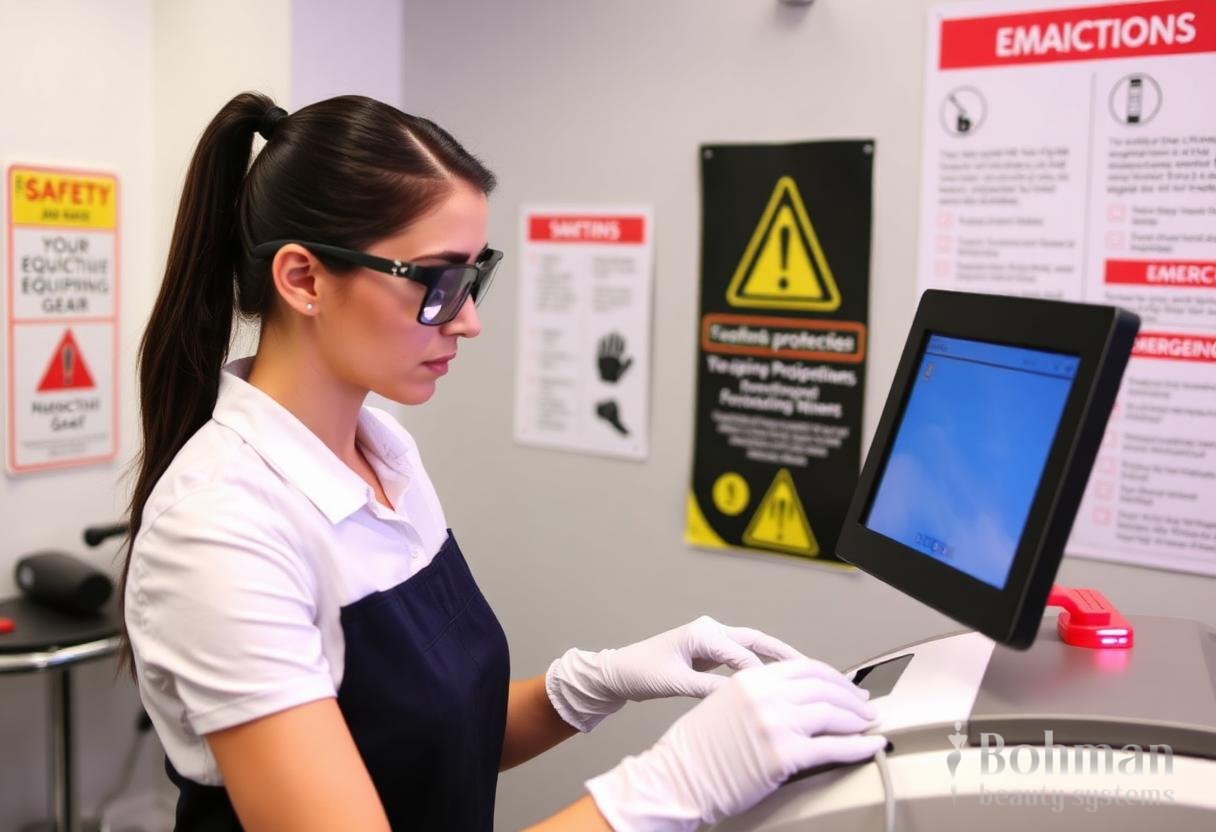
Protective eyewear is a non-negotiable requirement for both operators and clients. Proper eyewear must be selected based on the specific wavelength emitted by the laser or IPL device. For example, protective eyewear for IPL units should be suitable for multi-wavelength emissions to ensure comprehensive protection. Operators should also wear lab coats and gloves to safeguard skin and clothing from accidental exposure.
Emergency Procedures and Response Plans
Every salon should have well-defined emergency procedures in place. This includes protocols for accidents involving exposure to laser beams, equipment malfunction, and fire emergencies. Staff must be trained in these emergency response plans, ensuring that they know how to react swiftly and effectively should an incident occur. Emergency contact numbers and equipment should be prominently accessible within the treatment area.
V. Client Safety and Comfort Considerations
Pre-Treatment Consultations and Assessments
Before any treatment begins, practitioners must conduct comprehensive consultations with clients. This assessment is vital for identifying any contraindications that may affect the treatment’s safety or effectiveness. Factors such as the client’s medical history, skin conditions, and current medications should be discussed openly.
Practitioners should also evaluate the client’s skin type and discuss their treatment goals and concerns. This ensures that clients are fully informed about what to expect and any potential risks involved in the procedure.
Post-Treatment Guidelines and Follow-Up Care
Post-treatment care is another critical aspect of client safety. Providers should give clients clear aftercare instructions to minimize the risk of complications such as burns, hyperpigmentation, or infections. Recommendations may include avoiding direct sun exposure, applying specific topical treatments, and monitoring for unusual side effects.
Additionally, practitioners should encourage clients to schedule follow-up appointments to assess the treatment’s effects and address any concerns that may arise.
VI. Conclusion
In conclusion, implementing safety guidelines is essential for operating laser and IPL equipment in salons. Adherence to laser safety protocols safeguards both clients and practitioners, ensuring a secure and effective treatment environment. By prioritizing regulatory compliance, maintaining proper training for operators, and conducting thorough pre- and post-treatment procedures, salons can cultivate trust and build a reputation for excellence in service.
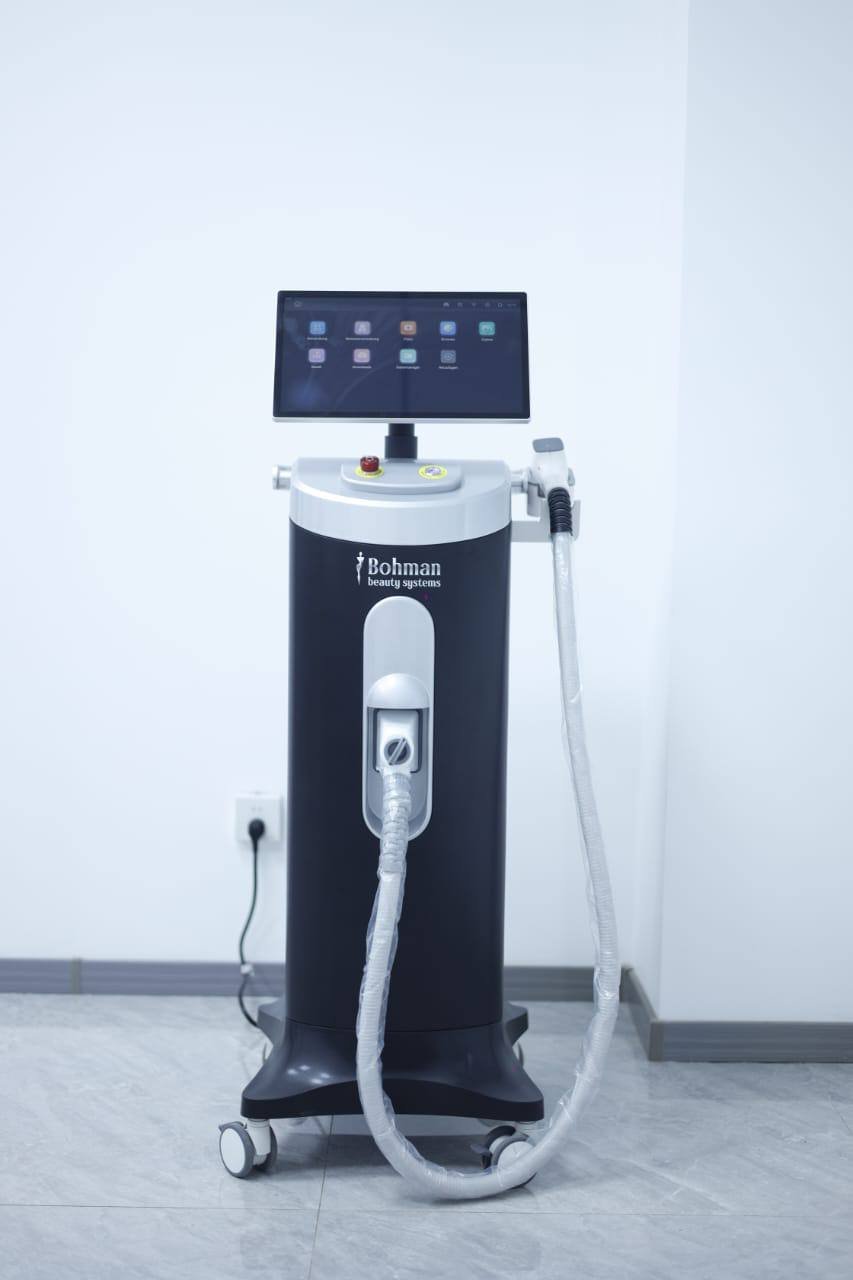
As part of a comprehensive salon operation, consider investing in advanced equipment like the DL 6000 Pro 4 diode laser from Bohman Beauty Systems. This versatile device not only enhances your service offerings but also embodies the efficiency and safety that modern clients expect from their beauty experiences. A commitment to ongoing education and adherence to safety protocols will set your salon apart in the competitive aesthetic marketplace.